Hohenlychen
About 100 kilometres north of Berlin, lies a small town called Lychen, where a health and nursing home for children with tuberculosis was built in 1902. The home was called Heilanstalten Hohenlychen, and initially consisted of a few buildings but was expanded over the years and in the mid-twenties over forty buildings had been built. It consisted of several departments depending on gender and degree of tuberculosis and a surgical department was also built. A spa and sanatorium were also built next to the health and nursing home.
In 1935, doctor and SS-Gruppenführer, Karl Gebhardt, was appointed head of the clinic. Gebhardt reorganised the clinic from a tuberculosis treatment centre to an orthopaedic clinic for athletics. Gebhardt developed programmes adapted for athletics with various kinds of disabilities. Hohenlychen and Gebhardt gained a reputation as one of Germany’s best treatment centers and one of Germany’s top doctors. In 1938, SS chief, Heinrich Himmler, appointed Gebhardt his personal physician.
After the outbreak of war, the clinic became a hospital for the Waffen-SS. But the high status of the clinic also made several senior Nazi leaders and SS officers contact Gebhardt for treatment, including. Hitler’s deputy, Rudolf Hess, and Hitler’s architect and minister of armaments, Albert Speer. Along Gebhardt, several other SS doctors also served at Hohenlychen. Gebhardt also conducted medical experiments on female prisoners at the nearby Ravensbück concentration camp. One experiment involved exposing prisoners to simulated war injuries and treating the injuries with sulfonamide (an early form of antibiotic). Another experiment was to perform amputations on healthy prisoners. After the war, Gebardth was brought to trial (1947) and sentenced to death (1948) for his participation in these medical experiments.
It was also at Hohenlychen that Heinrich Himmler on three occasions met Swedish Red Cross representant, count Folke Bernadotte, to discuss the release of Norwegian and Danish women citizens in German concentration camps. On the first visit in April, according to Bernadotte, SS-Brigadeführer Walter Schellenberg, with Himmler’s knowledge, probed the possibilities for Bernadotte to present a proposal to Eisenhower for a separate peace. Nothing came out of these negotiations, instead, when Hitler was informed, he excluded Himmler from the party and stripped him of all his duties.
Current status: Preserved with information board (2011).
Get there: Car.
Follow up in books: Longerich, Peter: Himmler: A Biography (2009).
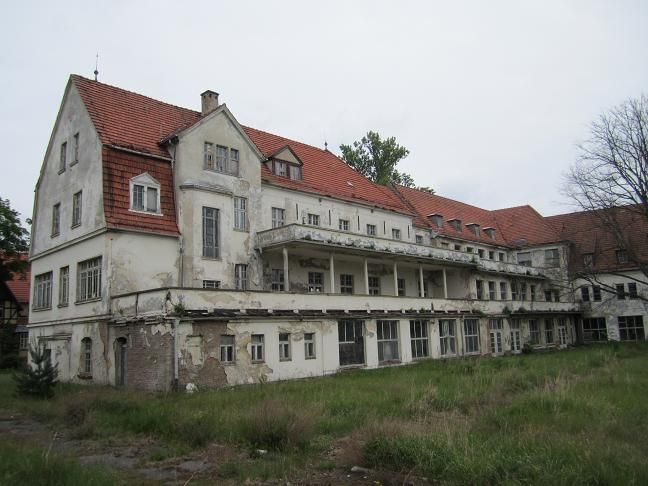
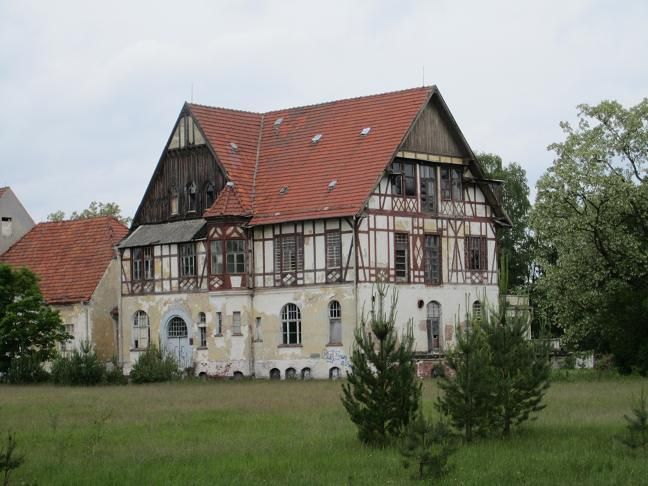
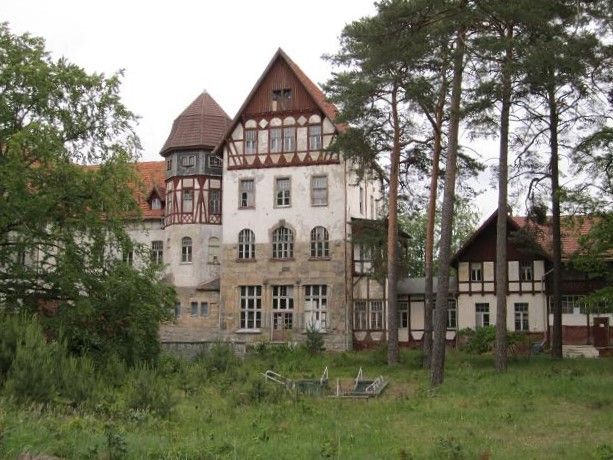
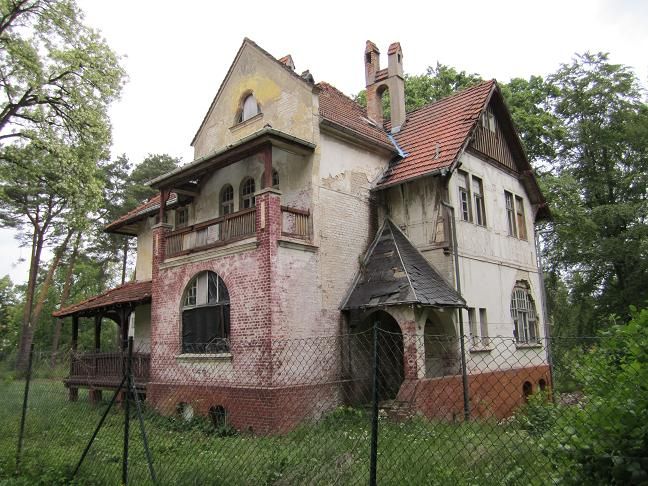
After the war, the health and nursing home was taken over by the Soviet Red Army, which partly turned it into a military camp. After the fall of the Soviet Union in 1991, the Red army began to withdraw and the last Soviet soldier left Hohenlychen in august 1993. Then the site began to decay, but a German contractor bought in the mid-00s bought several of the buildings and began to renovate them into apartments. As far as I know several of the buildings are off limit.