Vägershult
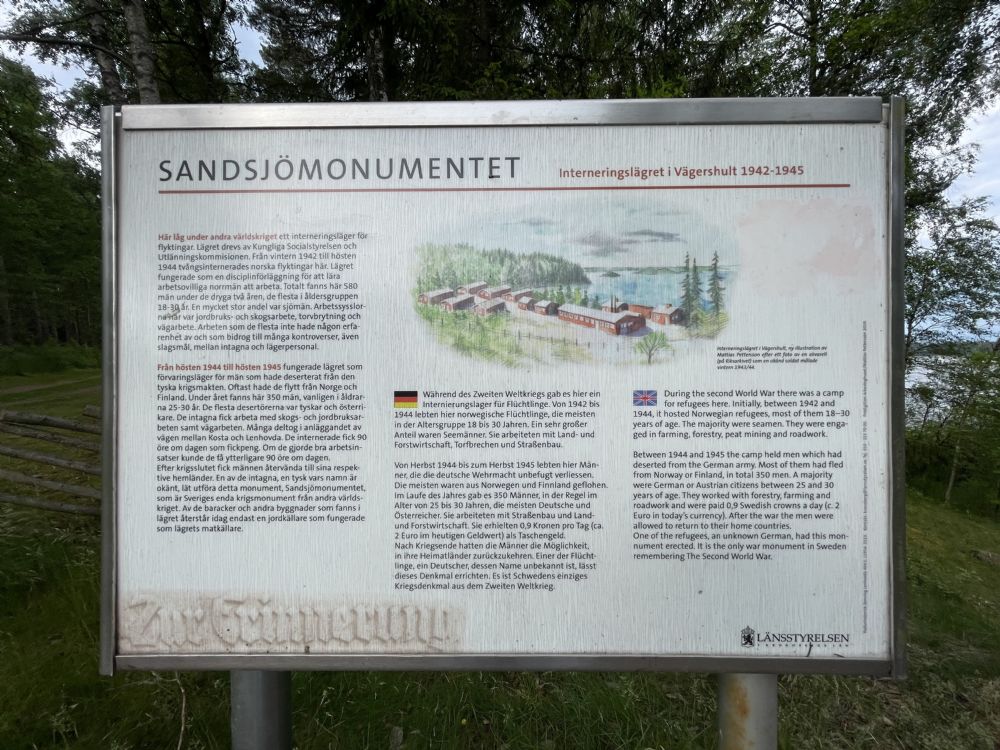
About fourty kilometres east of Växjö lies a small village called Vägershult and there next to lake Sandsjön a detention camp for Norwegian citizens was set up in 1942. The prisoners had for diciplinary reasons been moved to Vägershult from other prisons. The camp was run by the royal board of Socialstyrelsen and the Norwegian legation in Stockholm and consisted of about ten buildings (prisoner huts, administration, kitchen/dining room, laundry room). The camp had low security and no fence, therefore it was quiet easy to escape if one wanted. The prisoners had to work with forestry, agricultural and construction of roads. In the autumn of 1944, the camp became a detention camp for German and Austrian refugees and deserters who had fled to Sweden, mainly from Norway and Finland. A small number of other nationalities who had fled to Sweden were also confined in the camp. Security was tightened and a barbed wire fence was put up around the camp. The prisoners were mainly used in road constructions. After the war, the prisoners returned to their homelands. The last prisoners left the camp in the autumn of 1945. Between 1942 and 1944, about 580 Norwegians were imprisoned and between 1944 and 1945 about 350 (mainly germans and austrians) were imprisoned. In late 1945 the camp was demolished.
Current status: Preserved with information board (2026).
Get there: Car.
Follow up in books: Gilmour, John: Sweden, the Swastika and Stalin - The Swedish Experience in the Second World War (2011).
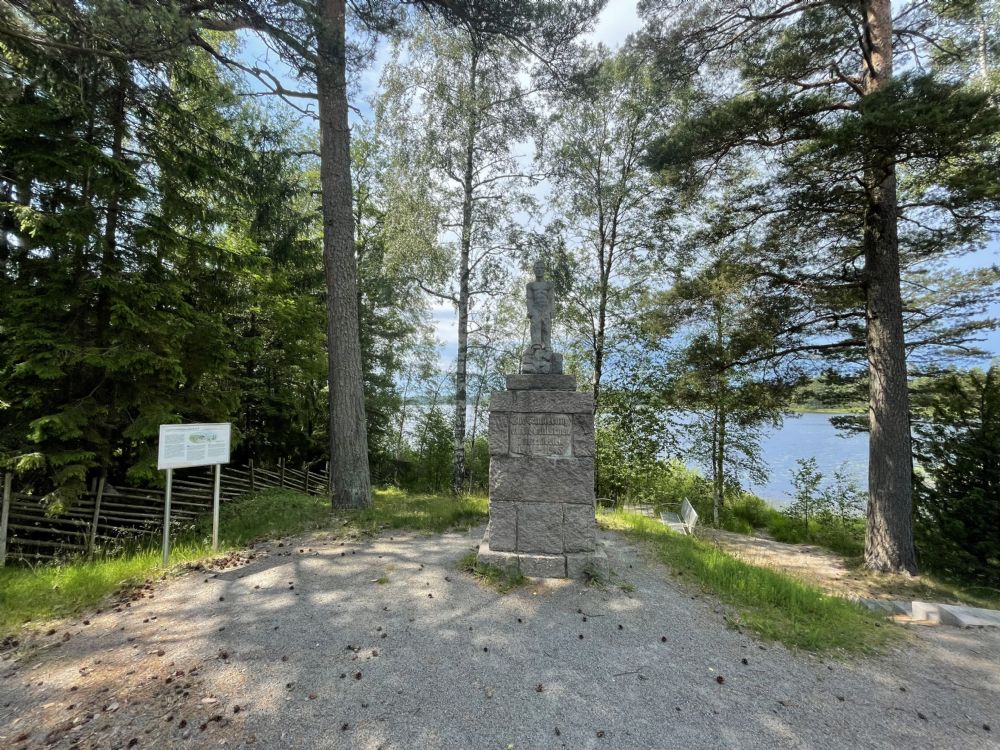
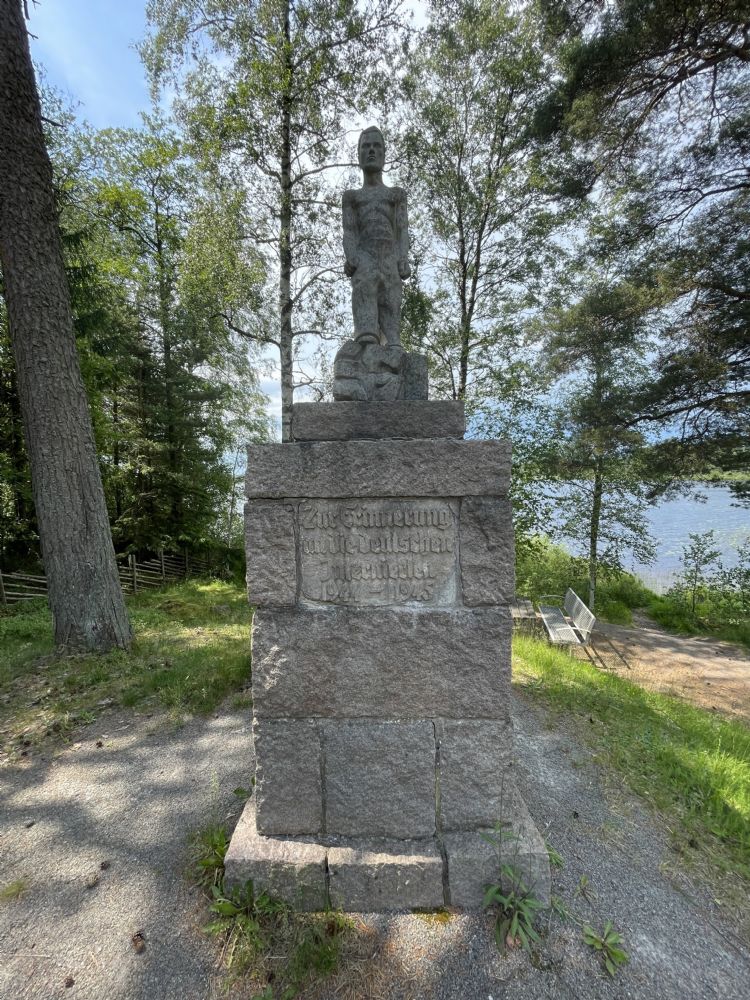
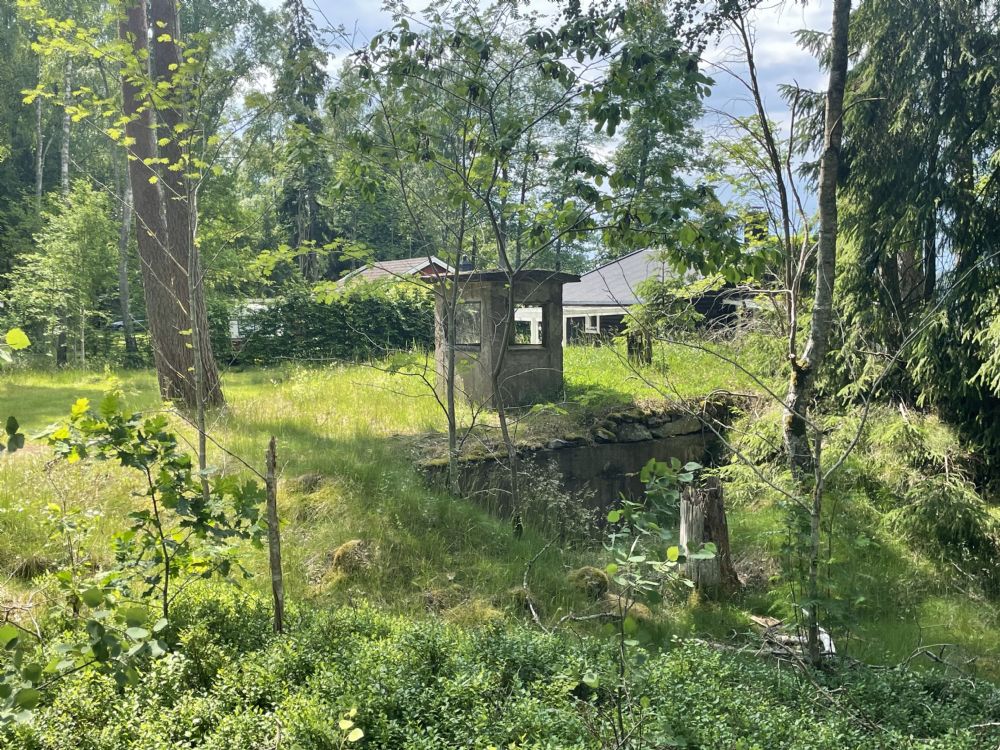
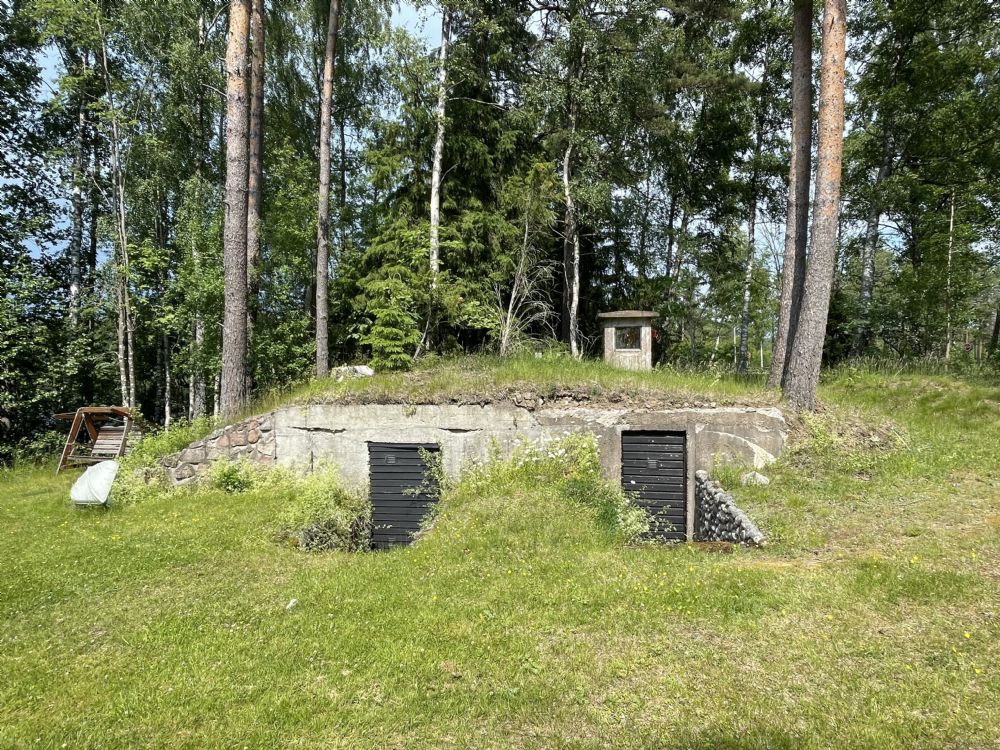
Although nearly demolished, one structure still remains, a semi underground storage used as a food cellar about twenty metres southeast of the monument. However, it is located on private property, but easy to find. The monument itself is located at a rest area next to the lake Sandsjön and is dedicated to the German and Austrian prisoners. The monument was created by an unknown German camp prisoner.